
Carroll County Arrest Records and Court Charges
A Carroll County arrest record is the account of an arrest itself. It shows who was taken in, which agency made the stop, and the booking that followed. In this county, Sheriff Clint Walker holds that booking side. After an arrest, a person normally moves through booking, identification, property intake, and screening before an initial appearance. An arrest does not set the formal charges, though. A prosecutor reviews the facts and decides what to file. Those filed charges go to the court clerk and become the court charge record. So one record starts at the jail door, and the other starts at the prosecutor's desk.
The two records answer different questions. An arrest record covers custody and booking, and the jail roster and booking detail sit on the Carroll County inmate records page. The court charge record covers what the prosecutor actually filed and how it moves through the case. The court charges after arrest can grow, shrink, or change as the matter proceeds. For the full case file, with pleas, hearings, and the final outcome, the Carroll County criminal court records hold the complete picture. Start with the right office and the search goes faster.
Find Carroll County Arrest Records
Court charges in Carroll County felony cases live in Mississippi Electronic Courts, the state online system known as MEC and its public side, PAMEC. The Fifth Circuit Court District system holds Carroll County circuit criminal files, where the charge list and charge status appear. Justice Court handles many initial and lower charges, and those records are not on MEC, so a misdemeanor or early charge often means a phone call or a counter visit. The arrest and booking detail is a different lookup, kept by the Sheriff rather than the court.
- Register for a PAMEC account on the online registration page and sign in to the Fifth Circuit MEC site for remote access.
- Search by the defendant's name or by the case number.
- Open the case and read the full list of charges filed.
- Check each charge for its code, its level, and its current status.
Charges also roll up to statewide systems. The Mississippi Department of Public Safety runs the Criminal Information Center, which supports law-enforcement wants and warrants checks. For court files older than the MEC go-live, or for lower-court charges, the Circuit Clerk and the Justice Court clerks are the direct route. PAMEC charges a small annual fee plus a per-page view cost, so plan for that before pulling documents.
The arrest and booking side is held by the Sheriff, not the court. Carroll County has no official online jail roster, so a recent arrest means a call to the office below.
Carroll County Sheriff
Sheriff Clint Walker
P.O. Box 291
Carrollton, MS 38917
662-237-9283 / 662-237-9284
How Carroll County Charges Get Filed
The charge record begins when the prosecutor files a charging document. Before that, an arrest and booking happen, but no formal court charge exists yet. The document names each crime and starts the court case. Mississippi uses three main charging documents, and the one used depends on how serious the alleged crime is.
| Complaint | Information | Indictment | |
|---|---|---|---|
| Filed By | Officer / Prosecutor | Prosecutor | Grand Jury |
| Common For | Misdemeanors | Many felonies | Serious felonies |
| Starts | The case | The case | The case |
In Carroll County, misdemeanors and early charges usually start in Justice Court, which handles county traffic, small claims, and lower criminal matters. The county runs a Northern District court in Carrollton and a Southern District court in Vaiden, so the citation or notice tells you which counter holds the early file. Felony charges run through the grand jury, and the resulting indictment is filed with the Circuit Court in the Fifth Circuit District. The Fifth District Attorney, Adam Hopper, handles felony prosecution for the county, while the County Prosecuting Attorney, Lori Bell, covers county-level charges. The arresting agency supplies the facts, but the prosecutor decides what charge, if any, gets filed.
Justice Court judges often handle the first step too. They can set bond and hold a preliminary hearing in a felony matter, so the earliest public activity may show there before any Circuit Court indictment exists. That early record can list the charge, the bond, and the next court date.
Carroll County Charge Status
A charge is not fixed once it is filed. As a Carroll County case moves, charges can be amended, reduced, added, dropped, or dismissed. The court file tracks each change with a status term. Mississippi court systems use flags like Nolle Pros Pending, Bound Over, Plea Pending, and Trial Pending to mark where a charge stands. Reading those flags tells you whether a charge is live, gone, or sent to a higher court.
| Status | What It Means |
|---|---|
| Pending | The charge is filed and still active while the case moves forward. |
| Amended / Reduced | The prosecutor changed the charge, often to a lesser offense. |
| Dismissed | A judge or prosecutor ended the charge, and it is no longer pursued. |
| Nolle Prosequi | The prosecutor formally chose not to go forward on the charge. |
| Bound Over | A lower-court charge was sent up to Circuit Court for grand jury review. |
Note: A dropped or dismissed charge can still appear in older records until an expunction order clears it from public view.
Charges vs. Convictions
A charge is an accusation. A conviction is the outcome after a plea or a verdict. The two are easy to confuse, but they carry very different weight. A person can be charged and later cleared, and the charge alone proves nothing about guilt. Probable cause supports a charge. A conviction needs proof beyond a reasonable doubt. Both can show up in public Carroll County court records, so read the disposition before drawing a conclusion.
| Charge | Conviction | |
|---|---|---|
| Stage | Accusation | Verdict or plea |
| Burden of Proof | Probable cause | Beyond reasonable doubt |
| Public Record | Yes | Yes |
This gap matters most in background checks, where an old arrest can outlive a quiet dismissal.
Sealed vs. Expunged Records
Some Carroll County records leave the public view entirely. Sealing hides a record from ordinary searches, while expunction goes further and treats it as though it never happened. Mississippi Code Section 99-19-71 governs many expunctions and allows certain misdemeanor convictions and one qualifying felony to be cleared after the conditions are met. Those conditions can include paid fines and costs and a waiting period. Some serious felonies cannot be expunged at all.
| Sealed | Expunged | |
|---|---|---|
| Visibility | Hidden from public | Destroyed / treated as never existed |
| Law Enforcement | Limited access | Very limited |
| Eligibility | By statute or court order | Certain misdemeanors, one felony under § 99-19-71 |
After an order is entered, public search results may show no record or an expunged flag, though agency systems can take time to catch up.
Carroll County Charge Codes
Each charge ties to a specific statute, and the court file lists that code next to the offense. The code points to the exact crime and its level. Mississippi sorts offenses into felonies, misdemeanors, and lesser violations. One arrest can produce several separate charges at once. A single booking might list a felony count, a misdemeanor count, and a traffic count, each tracked on its own. The level drives where the case is heard and how the charge is resolved.
- Felony: serious crimes heard in Circuit Court, often charged by indictment.
- Misdemeanor: lower crimes handled in Justice or Municipal Court.
- Traffic and ordinance violations: county or city tickets with fines.
Statewide Charge and Criminal History Lookups
Charges in Carroll County feed into statewide systems run by the Mississippi Department of Public Safety. The DPS Criminal Information Center keeps wants, warrants, and criminal-history data and supports law-enforcement checks around the clock. It also links the state sex offender registry, a public tool that maps registered offenders by name and area. A full background-style criminal history usually runs through DPS rather than a single county court.
The Mississippi sex offender registry is searchable on the DPS-hosted registry site, which the Criminal Information Center points to.
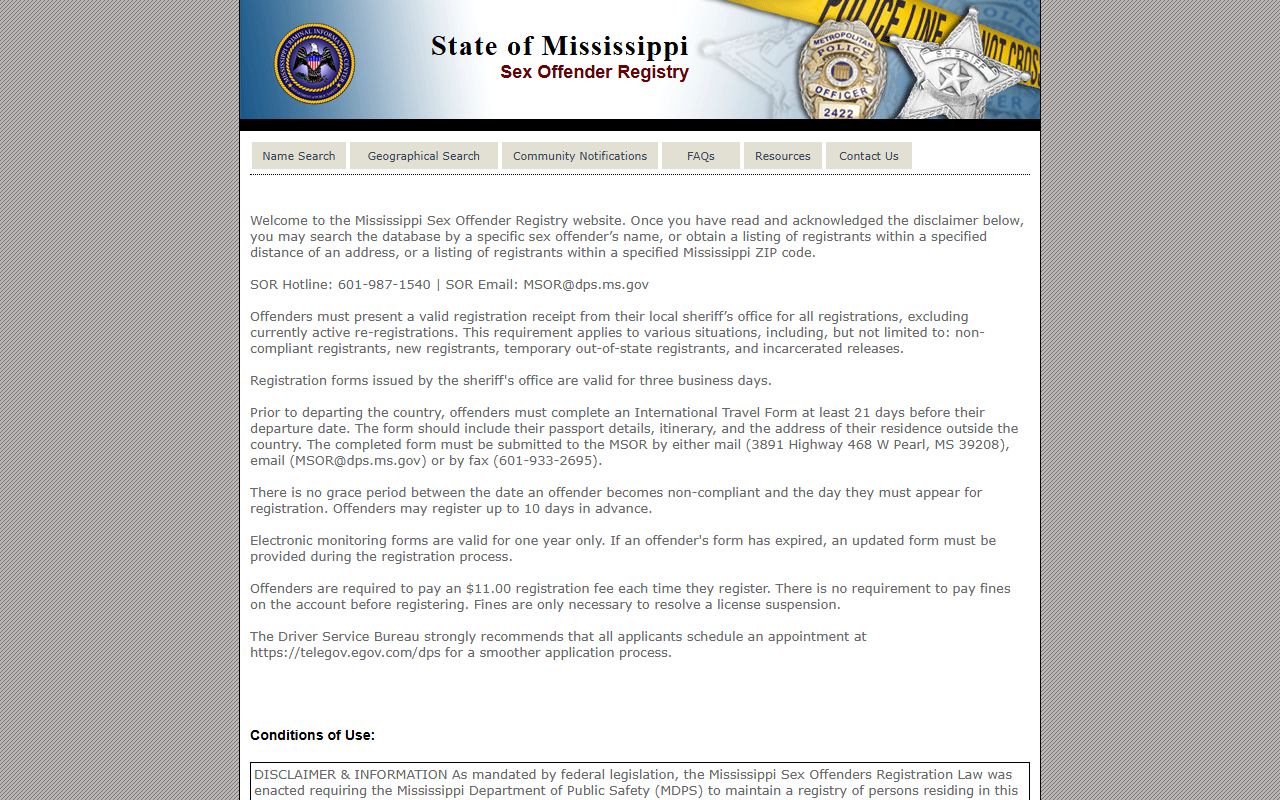
That registry sits apart from any Carroll County arrest record, since it tracks registration status rather than a single arrest or charge. Note: the Criminal Information Center supports law enforcement, so the public gets criminal history through formal channels, not a direct online search.
Not every charge stays in state court. Federal crimes from Carroll County are prosecuted in the U.S. District Court for the Northern District of Mississippi, and the federal charge record lives in the federal system, not in county or state court files. The federal prosecutor for the area is the U.S. Attorney's Office for the Northern District.
The federal prosecutor's work is described on the U.S. Attorney's Office for the Northern District of Mississippi site.
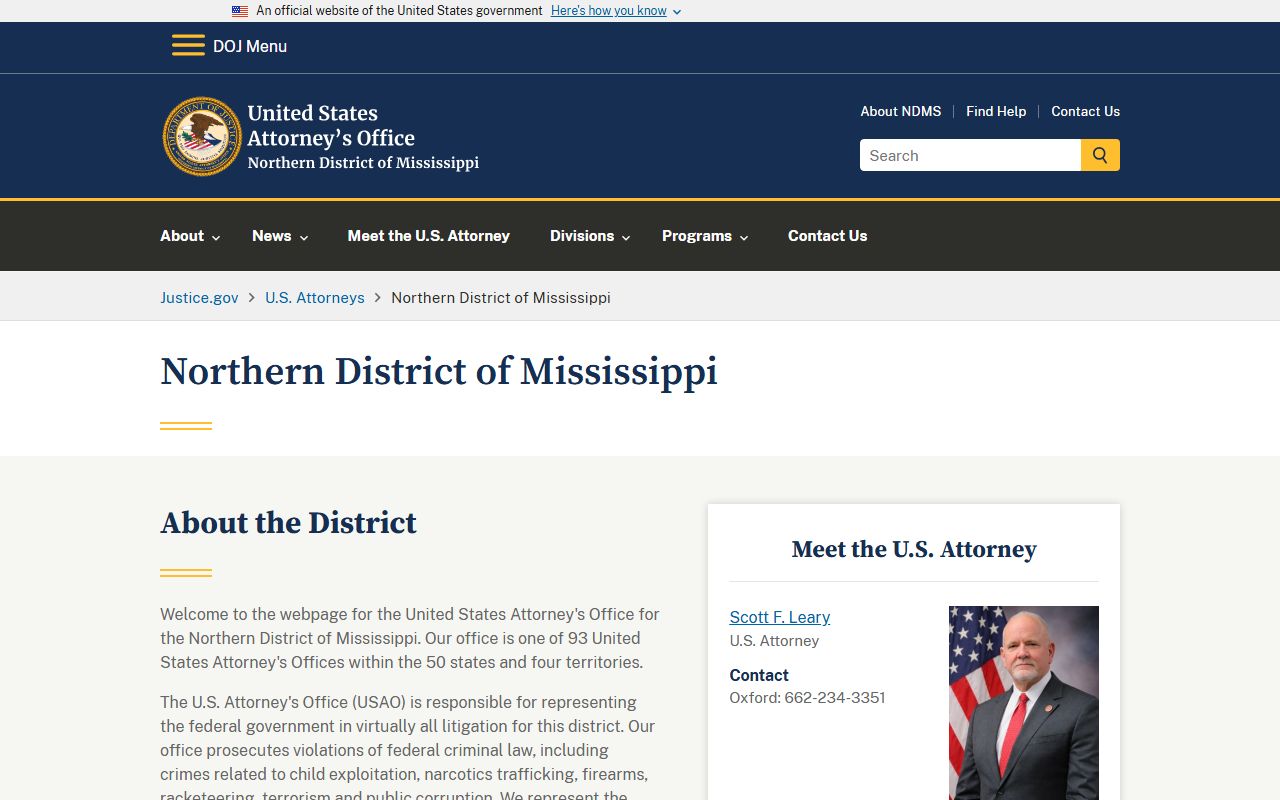
A Carroll County arrest tied to a federal charge would be tracked there and through federal court records, not the county clerk.
Background Check Considerations
There is a real difference between a casual record lookup and a formal background check. A quick look at Carroll County arrest records or court charges is fine for personal knowledge. Using that information to decide on a job, an apartment, credit, or insurance is governed by the federal Fair Credit Reporting Act. The FCRA sets accuracy and notice rules that ordinary court searches do not meet. For those regulated uses, a licensed screening agency is the proper route.
Important: This site is not a consumer reporting agency under the FCRA, and its information cannot be used for employment, credit, tenant, or insurance decisions.
Restricted Charge Records in Carroll County
Not every charge is open to the public. Youth court records in Carroll County are confidential under Mississippi Code Section 43-21-251, and charges involving children are generally not disclosed. Sealed cases show only a flag, with the detail closed off. Expunged charges should not appear in an ordinary search at all. Records tied to an open investigation may also be held back until the matter resolves. When staff cannot release a detail by phone, it is usually because the law restricts it.
For anything sealed, juvenile, or tied to a pending indictment, expect limited access and verify directly with the clerk who holds the file. If an arrest later moved up to Circuit Court, check each linked record, since the sheriff file, the Justice Court entry, and the circuit case may not all clear at the same time.